

Herbal medicine is often perceived as gentle, traditional, and inherently safe.
However, in professional practice, the reality is more complex.
Natural substances can have significant physiological effects — and must be applied with clinical understanding and caution.
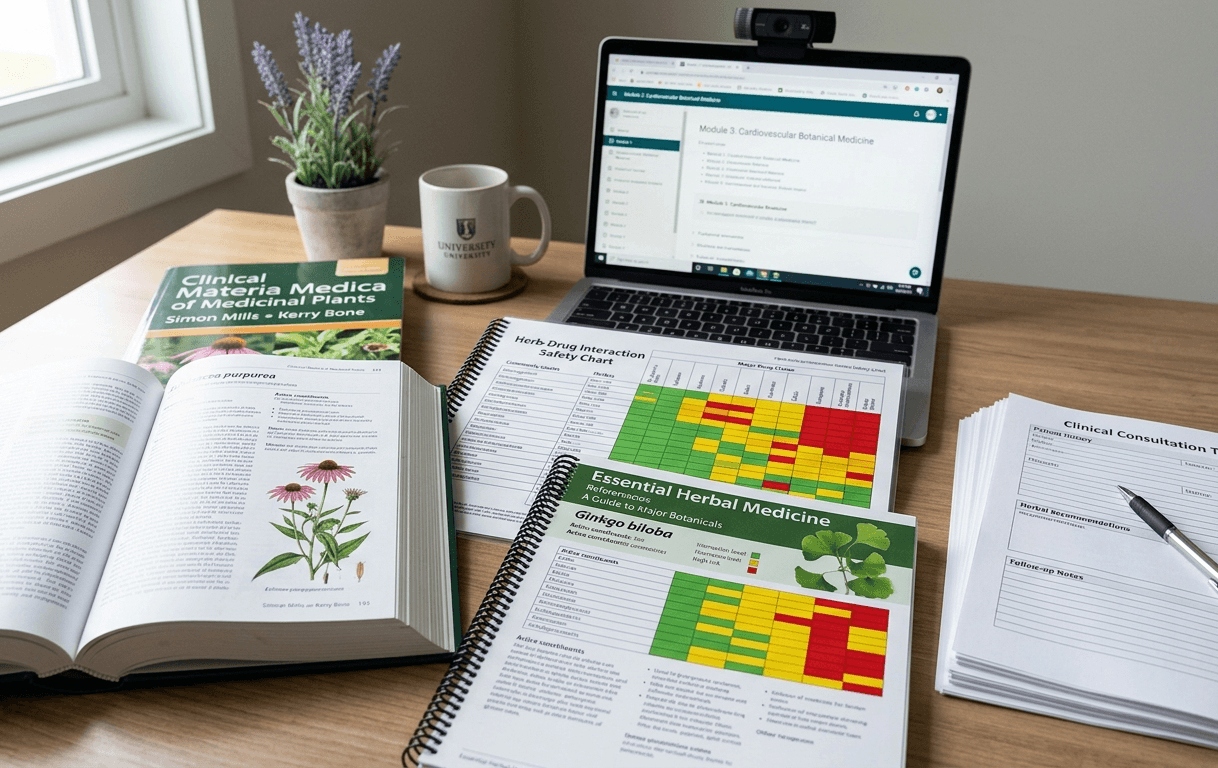
Many people encounter herbal medicine through informal sources or general wellness content.
This often creates the impression that herbal practice is simply about matching herbs to symptoms.
In reality, professional herbal medicine is grounded in:
*pharmacological understanding
*individual client assessment
*safety and interaction awareness
*structured clinical reasoning
Herbal interventions are influenced by:
*dosage and preparation
*individual health status
*medication interactions
*physiological variation
Without structured training, application can be inappropriate or unsafe.

Practitioners are trained to:
*identify underlying health patterns
*design personalised herbal strategies
*monitor and adjust outcomes
*ensure measurable, accountable outcomes for clients
*collaborate with GPs where required
Professional herbal medicine education ensures practitioners are clinically responsible and ethically grounded.
Core study areas include:
*human biology and physiology
*materia medica
*clinical case analysis
*professional ethics and scope

IHA trains students to practise as herbal medicine practitioners and, through that training, as Integrative Health Practitioners. Iconic Health Academy is a private college offering Bachelor-level qualifications in herbal medicine, naturopathy, nutritional medicine, and mind-body medicine — delivered entirely online and accredited across 38 countries. Built on more than two decades of curriculum development originally established within an Australian government-accredited education system, the programme develops clinically competent practitioners capable of working responsibly alongside GPs and mainstream healthcare systems. A core emphasis is placed on measurable, accountable outcomes within defined scope of practice.
Herbal medicine requires more than knowledge of plants — it requires clinical judgement, structure, and responsibility.
Understanding training depth is essential before entering the field.
Explore the Bachelor of Herbal Medicine →
