
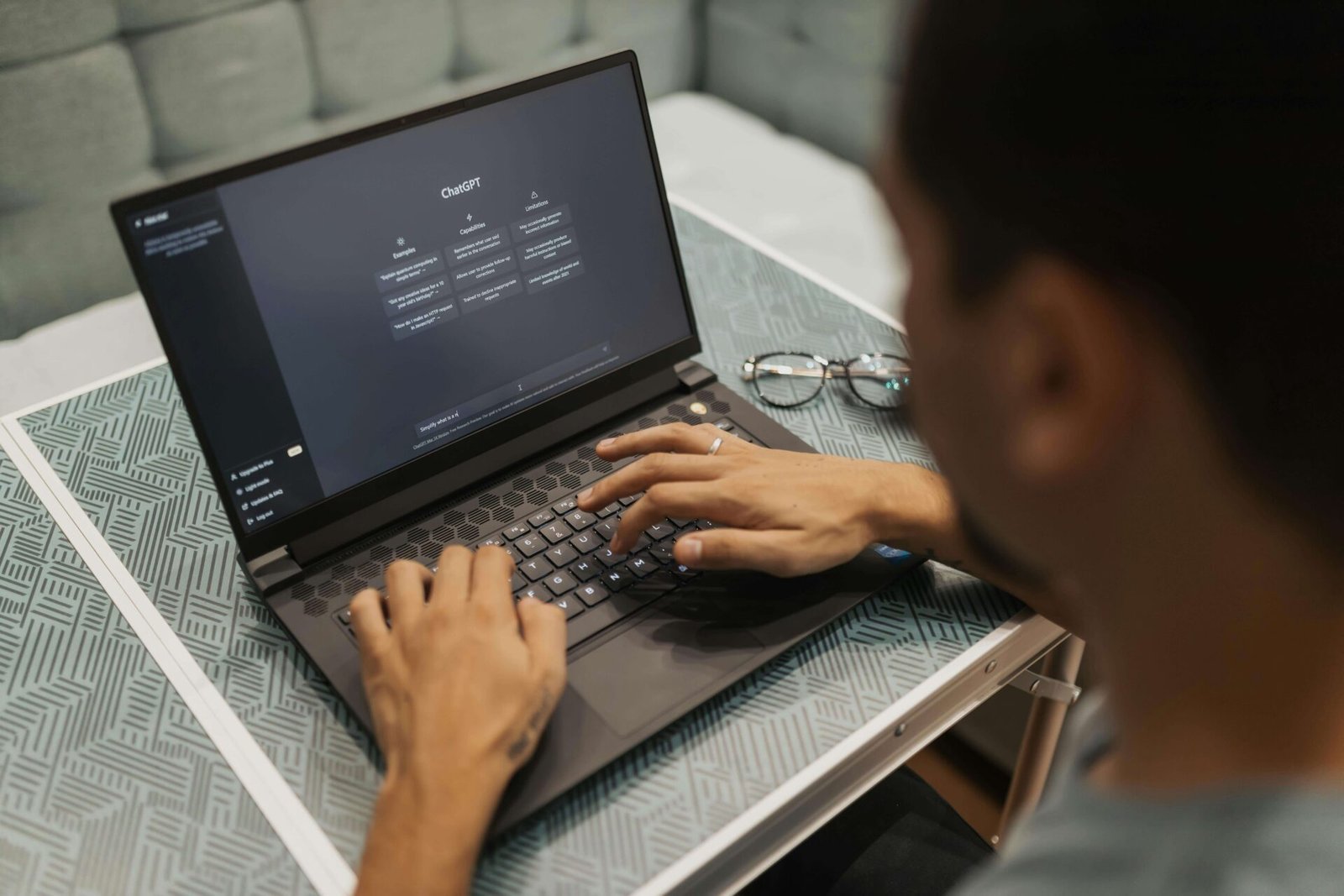
AI can now generate meal plans, suggest supplements, and summarise complex health information in seconds.
For anyone exploring a career in natural health, this raises an important question:
If information is so accessible, do we still need practitioners?
It’s a reasonable question — and one worth exploring carefully. The short answer is that accessible information does not substitute for what a trained Integrative Health Practitioner brings: clinical reasoning, a defined scope of practice, and the discipline to apply both responsibly — working alongside conventional medicine, not in opposition to it.
There is no doubt that AI has changed how people access knowledge.
What once required years of study or access to specialised resources can now be generated instantly. From dietary suggestions to general wellness advice, information is no longer scarce.
In many ways, this is a positive shift. It allows individuals to become more informed and engaged in their own wellbeing.
But it also creates a new challenge:
How do we move from information to responsible application?
AI can provide answers.
What it cannot do is take responsibility for those answers.
Working with real people involves more than selecting the “right” recommendation. It requires:
These are not tasks of information retrieval. They are functions of clinical reasoning and professional judgement.
A trained naturopath does not simply provide suggestions. They work with complexity.
Each client presents a unique combination of history, lifestyle, preferences, and goals. What may be appropriate for one person may not be suitable for another.
A practitioner’s role involves:
Equally important is knowing where their scope begins and ends — and when collaboration or referral is needed. This is what distinguishes an Integrative Health Practitioner from an information provider: not the volume of knowledge, but the clinical judgement to apply it safely, within scope, and in genuine alignment with the broader healthcare system — including knowing when a client needs a GP, not a naturopath.
In Australia, naturopathy is largely self-regulated.
This means that professional credibility is not defined by a single governing body, but by the practitioner’s ability to demonstrate competence, clarity, and ethical practice.
In a landscape where information is widely available, the distinction between knowing and practising becomes even more important.
If anything, the rise of AI has made structured education more relevant — not less.
When information is abundant, the differentiator is no longer access to knowledge. It is the ability to:
A well-designed naturopathy programme does not simply deliver content. It develops the skills required to work with real clients — safely, ethically, and confidently. Iconic Health Academy’s Bachelor of Naturopathy is built on precisely this foundation; more than two decades of curriculum development, now delivered entirely online and accredited across 38 countries, and designed to train Integrative Health Practitioners who are clinically confident, professionally grounded, and aligned with mainstream healthcare.
Rather than asking whether AI can replace naturopaths, it may be more useful to ask:
What does it take to work responsibly with another person’s health?
The answer extends beyond information. It involves judgement, structure, and professional identity — all of which require deliberate development over time.
For those exploring naturopathy, AI can be a useful tool for learning and research.
But becoming a practitioner involves something different: the ability to interpret, apply, and take responsibility for decisions in real-world contexts.
Understanding this distinction can help you choose a pathway that not only informs you, but prepares you.
At Iconic Health Academy, that preparation means graduating as an Integrative Health Practitioner: someone with a structured clinical framework, a defined scope of practice, and the ability to deliver measurable, accountable outcomes for each client — all while working responsibly alongside the wider healthcare system.
Explore the Bachelor of Naturopathy →
